
Ingredients
Equipment
Method
Step 1 – Make the Dough
- On a clean work surface or in a large bowl, mound the flour and make a well in the center.
- Add the eggs, egg yolk, olive oil, and salt into the well.
- Using a fork, whisk the eggs, gradually pulling flour from the edges into the mixture until it forms a shaggy dough.
Step 2 – Knead the Dough
- Knead the dough by hand for about 8–10 minutes until smooth and elastic.
- If it’s too dry, add a few drops of water; if too sticky, add a dusting of flour.
Step 3 – Rest the Dough
- Shape the dough into a ball, wrap in plastic wrap, and let rest at room temperature for 30 minutes.
Step 4 – Roll Out the Dough
- Divide the dough into 4 pieces.
- Roll each piece with a pasta machine or rolling pin until thin (about 1–2 mm).
- Dust lightly with flour to prevent sticking.
Step 5 – Cut & Shape
- Cut into desired pasta shapes — fettuccine, tagliatelle, or sheets for lasagna/ravioli.
- Arrange on a floured surface or pasta rack.
Step 6 – Cook the Pasta
- Bring a large pot of salted water to a boil.
- Cook fresh pasta for 2–4 minutes until al dente.
- Drain and toss with your favorite sauce.
Notes
🧊 Storage & Reheating
Refrigerator: Store fresh pasta (uncooked) for up to 2 days in an airtight container.
Freezer: Freeze in nests on a tray, then transfer to a freezer bag for up to 2 months.
Reheating: Boil from frozen for 4–5 minutes.
🥄 Variations
Herb Pasta: Add 2 tbsp finely chopped fresh herbs into the dough.
Spinach Pasta: Blend spinach into the eggs before mixing with flour.
Whole Wheat Pasta: Replace half the flour with whole wheat flour.
Flavored Pasta: Infuse with paprika, turmeric, or squid ink for color and taste.
❓ 10 FAQs
Do I need a pasta machine?
No, you can roll by hand with a rolling pin. Why does my pasta dough feel tough?
It may need more resting time or a splash of water. Can I make it ahead?
Yes, store wrapped in the fridge for up to 2 days before rolling. Why is my pasta sticky after cooking?
Use enough salted boiling water and toss immediately with sauce. Can I double the recipe?
Yes, just maintain the same ratios. Can I use bread flour instead?
Yes, it will make a slightly firmer pasta. How do I stop pasta from clumping?
Dust with flour and shake gently before cooking. Can I make gluten-free pasta with this recipe?
Not directly — use a gluten-free flour blend. What sauces go best with fresh pasta?
Light sauces like olive oil and garlic, or cream-based Alfredo. How thin should I roll the pasta?
For most shapes, about 1–2 mm thick. 🏁 Conclusion
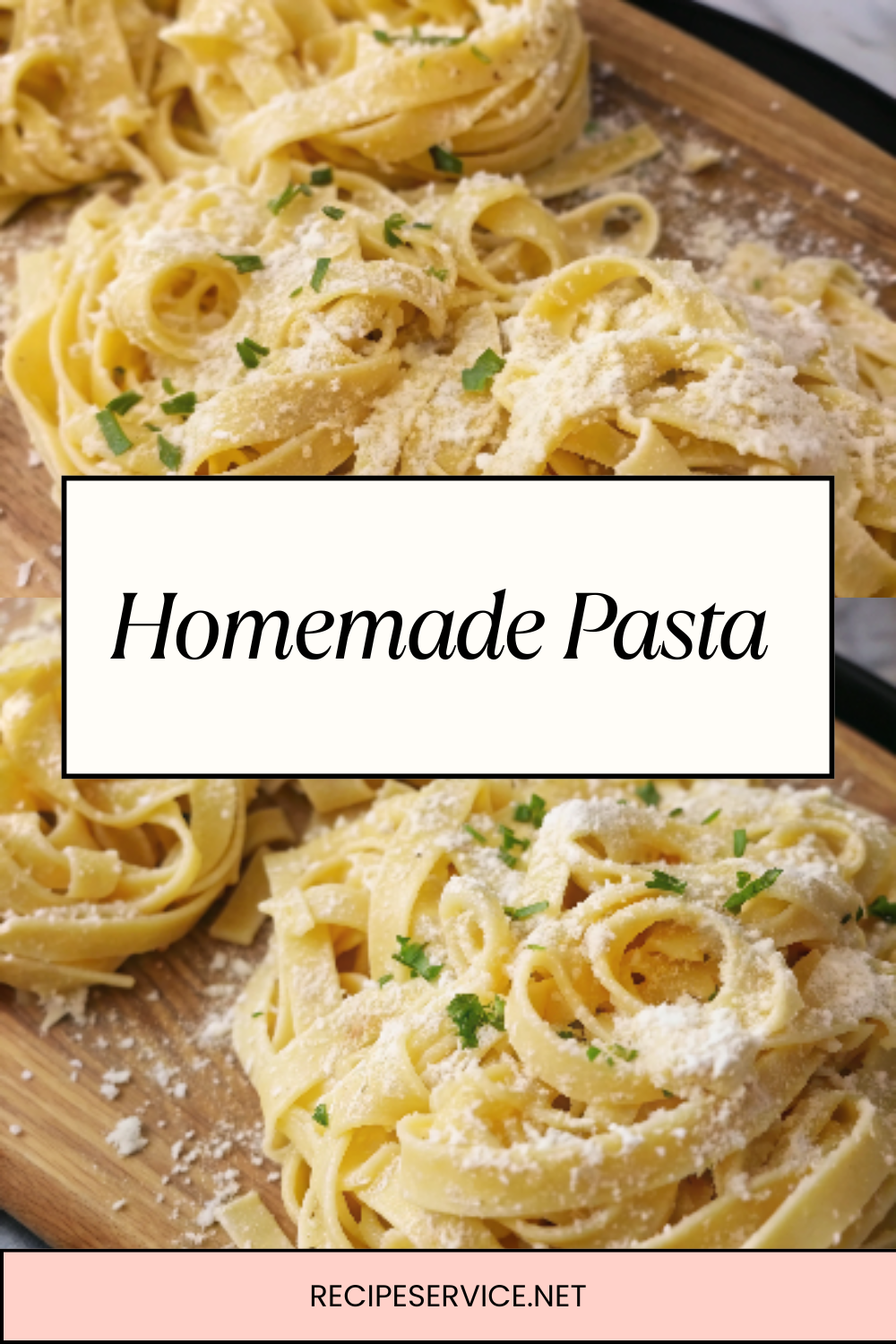
This Homemade Pasta is a kitchen classic that’s simple yet impressive. With a little practice, you’ll have silky, tender noodles ready to pair with any sauce — a perfect base for countless Italian-inspired meals.
No, you can roll by hand with a rolling pin. Why does my pasta dough feel tough?
It may need more resting time or a splash of water. Can I make it ahead?
Yes, store wrapped in the fridge for up to 2 days before rolling. Why is my pasta sticky after cooking?
Use enough salted boiling water and toss immediately with sauce. Can I double the recipe?
Yes, just maintain the same ratios. Can I use bread flour instead?
Yes, it will make a slightly firmer pasta. How do I stop pasta from clumping?
Dust with flour and shake gently before cooking. Can I make gluten-free pasta with this recipe?
Not directly — use a gluten-free flour blend. What sauces go best with fresh pasta?
Light sauces like olive oil and garlic, or cream-based Alfredo. How thin should I roll the pasta?
For most shapes, about 1–2 mm thick. 🏁 Conclusion
This Homemade Pasta is a kitchen classic that’s simple yet impressive. With a little practice, you’ll have silky, tender noodles ready to pair with any sauce — a perfect base for countless Italian-inspired meals.